


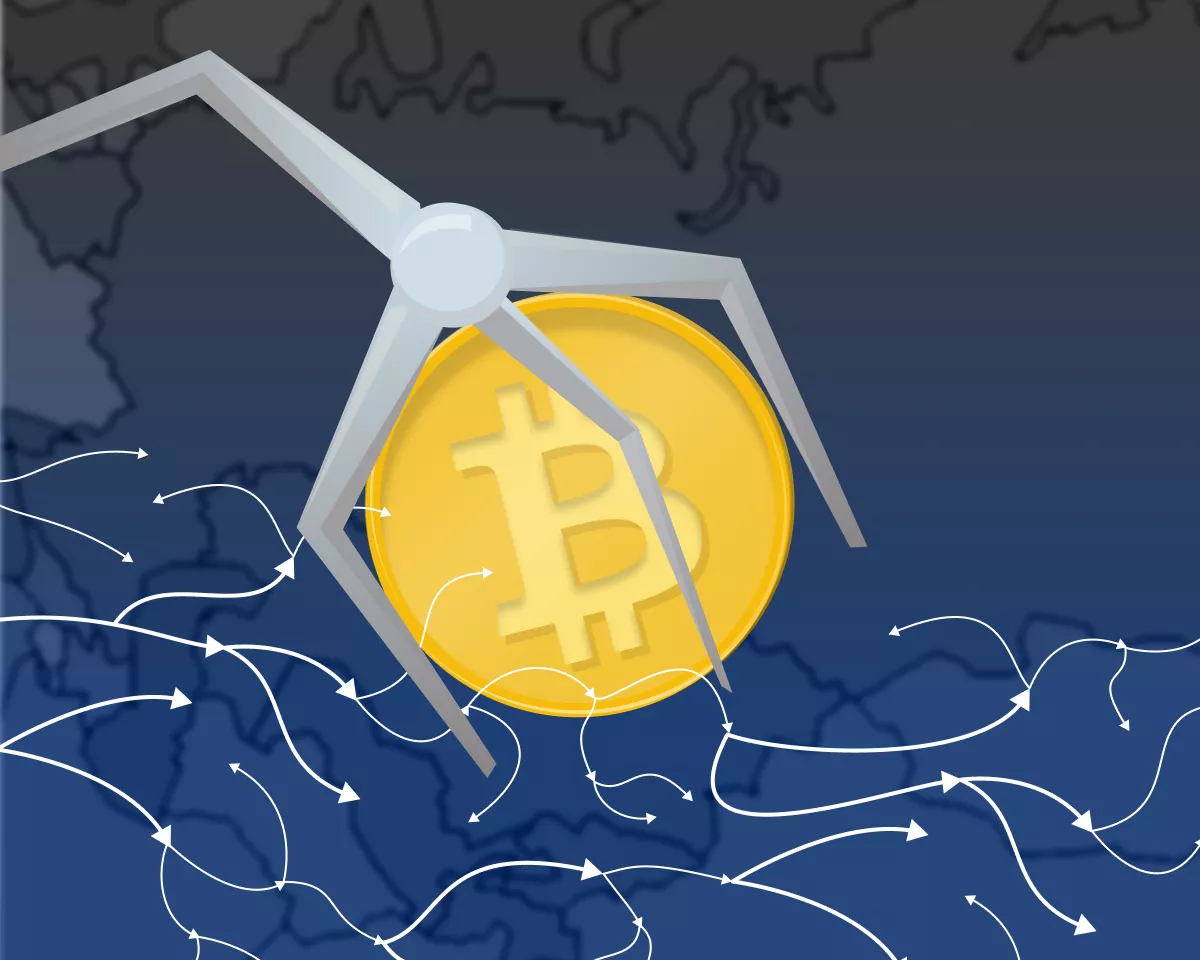
Rules for miners and a step toward taxation: how post-Soviet states regulated the Bitcoin market in 2022
In 2022, a number of post-Soviet states enacted basic laws bringing the cryptocurrency market into a legal framework. Others, by contrast, did not address the issue, awaiting greater clarity from foreign regulators.
We examined the main changes in cryptocurrency regulation across 15 countries.
Russia
Cryptocurrency circulation
Regulation of cryptocurrencies in Russia in 2022 slowed amid diametrically opposed views between the central bank and the Ministry of Finance on the issue.
The regulator proposed banning the circulation of cryptocurrencies and their mining on the territory of the Russian Federation. In the bill he drafted, million-dollar fines are prescribed for the issuance and acceptance of such assets as a payment method.
In the Ministry of Finance they did not agree with such a position and presented its own concept for regulating the market. It envisions conducting operations with digital currencies through banks, full identification of users and monitoring of transactions. It was this concept that the government subsequently supported.
That same concept underpinned the bill «On the Digital Currency». The document obliges crypto companies to obtain licenses and places exchanges and exchangers into a special register of operators. Payments using digital currencies are prohibited.
Later this document was expanded to reflect the recommendations of the Ministry of Internal Affairs on asset freezes .
In early July the State Duma of the Russian Federation passed a law that directly banned payments for goods and services ЦФА and utilitarian digital rights.
By the end of 2022, none of the regulatory acts detailing the provisions of the January roadmap had been finally approved at the state level.
There is hope to finalize cryptocurrency legislation in Russia to FATF standards by the end of 2023.
Taxes and declarations
From 17 March the state gained the ability in court to seize digital assets from officials and funds from bank accounts if the amount of deposits exceeds the official income over the past three years and the legality of the funds is not confirmed.
In April, President Vladimir Putin signed a law obliging candidates to disclose information about their expenditures when acquiring DFA and cryptocurrencies.
On 14 April the government submitted to the State Duma a tax bill on transactions with digital assets. Under it, the income tax for Russian organisations owning DFAs will be 13%, for foreign companies – 15%.
Mining
Since spring authorities shifted focus to regulating mining. Among the proposals were regional quotas and electricity limits, allowing mining of cryptocurrencies only for legal entities, and raising energy tariffs for ‘home’ miners.
The first two bills on mining failed to gain community support and were ultimately rejected.
In mid-November the State Duma registered a new bill regulating mining and the subsequent sale of mined cryptocurrencies. The document obliges individuals and legal entities to report to the tax authorities about mined cryptocurrencies, indicating the destination address.
However, due to the need for additional approvals, consideration of the bill was postponed to 2023.
Experts warned that passing the document in its current form could foster a black market of exchangers and the outflow of mined assets abroad.
Sanctions
On 24 February Russia began broad military actions in Ukraine. The withdrawal of key international companies and sanctions has taken a heavy toll on Russia’s financial system.
In April the EU prohibited providing services related to digital assets to residents of the Russian Federation whose deposits exceed €10,000. And from October a full ban on servicing their cryptocurrency wallets within the euro area.
According to some estimates, by mid-December 2022 accounts of 10,000–20,000 Russians on foreign trading platforms had been blocked with assets totaling 2–3 billion rubles.
In turn, Russian authorities described the sanctions as an incentive to develop digital assets and additional motivation for building their own crypto-market infrastructure, motivation.
Against this backdrop there were discussions about using cryptocurrencies in international settlements .
Digital ruble
The prototype launch of the digital ruble platform took place in January 2022 with the participation of five banks. Together with the regulator they tested the issuance of the asset, opening of digital wallets, and transfers between citizens.
In total, the first group for piloting the project included 12 banks.
It is expected that settlements in the digital ruble will begin in 2023. It is known that non-residents of the Russian Federation will not have access to the financial instrument at the initial stage of its rollout.
CBDC as the third form of money is planned to be launched by 2030.
Ukraine
Cryptocurrency circulation
On 17 February the Verkhovna Rada adopted the updated ‘On Virtual Assets’ law regulating cryptocurrency transactions within the country. The document was signed by the president Volodymyr Zelensky.
The National Bank of Ukraine (NBU) has established control over the turnover of virtual assets backed by monetary values. Supervision of other virtual assets, including those backed by securities or derivatives, has been entrusted to the National Commission on Securities and Stock Market (NKCSM).
It will also issue licenses and supervise activities of service providers involved in the turnover of virtual assets.
Later authorities announced their intention to fine-tune the law to align with European MiCA rules. To this end the NKCSM created an advisory council.
The law will come into force after parliament approves amendments to the Tax Code concerning crypto market taxation. When this will happen is unknown.
War-related restrictions
The Russian invasion has altered the ability of Ukrainian citizens to use cryptocurrencies freely.
PrivatBank, during martial law, barred its clients from funding hryvnias on foreign cryptocurrency exchanges.
The NBU, by another order banned purchasing cryptocurrencies from hryvnia accounts and set a monthly limit for such operations in foreign currency equivalent to 100,000 hryvnias.
Interaction between crypto companies and the state
Against the backdrop of restrictions interaction between state bodies and crypto projects has grown significantly.
Binance and WhiteBIT added the ability to verify Ukrainian clients through the state service “Diia”.
WhiteBIT also began providing assistance to Ukraine’s Crisis Response Centre MFA and equipping mobile government teams.
In spring the Ministry of Digital Transformation and Crystal Blockchain began cooperating to identify transactions of Russian citizens under sanctions. The work is conducted in line with US Treasury OFAC requirements, which prohibit such operations.
In August, with Binance’s involvement, the SBU blocked a wallet of a Russian weapons producer that donated funds to purchase military gear for militants in the so-called “L/DPR”.
In November Binance, Coinbase, KuCoin, Kraken and WhiteBIT began exchanging with ARMA information about holders of Bitcoin wallets in criminal proceedings.
Going forward, such activity could be streamlined thanks to OSCE-led consultations on mechanisms for seizing cryptocurrencies and preventing sanctions evasion via digital assets .
European blockchain partnership
In June Ukraine gained observer status in the European Blockchain Partnership (EBP). The country’s representative became the deputy minister of Digital Transformation for IT development, Oleksandr Bornyakov.
Participation in the EBP will allow Ukraine to integrate its digital economy with the EU and broaden cross-border blockchain partnerships with other countries. Primarily this concerns cross-border electronic services, including mutual recognition of diplomas, driving licences, removal of the apostille and notarisation of documents.
E-hryvnia
In November the NBU presented the concept for the e-hryvnia to participants in the virtual assets market, banks and financial institutions.
The e-hryvnia is defined as the “electronic form of Ukraine’s monetary unit,” issued by the National Bank. The project describes a possible design of the asset, its architecture, characteristics and benefits for payment service providers.
Several possible uses of the e-hryvnia are being considered:
- for retail cashless payments with the ability to “program” money — for social payments, reducing administration costs and ensuring targeted use of funds, as well as creating smart contracts;
- for use in the realm of virtual assets;
- for cross-border payments in a faster, cheaper and more transparent way.
Final launch timelines for the CBDC have not yet been determined.
Belarus
Cryptocurrency circulation
Since 2018 cryptocurrency and token circulation is allowed on a limited basis within the High-Tech Park (HTP).
In early 2022 Belarus proposed allowing to purchase digital assets via investment funds. Professional market participants will also be eligible to become residents of the HTP. The proposal is under discussion.
In February President Alexander Lukashenko issued a decree establishing a registry of cryptocurrency wallets used in illicit activity. The Justice Ministry defined the mechanism for seizing digital currencies within enforcement proceedings, including their sale as debtor property.
Involved state bodies and private entities are participating in this process. By May, the Investigative Committee had seized cryptocurrencies worth over 100 million Belarusian rubles ($39.4m at time of writing).
Taxes
In late November the president proposed to codify in the Tax Code the possibility of regulating the taxation of cryptocurrency operations by other laws.
Sanctions
Belarus, in supporting Putin’s policy, was hit by EU sanctions. Since March, its citizens have been forbidden from depositing funds into crypto wallets and purchasing securities in the euro area.
Mining-pool operator Ethermine, Bitfly, stopped serving Belarusian miners.
Kazakhstan
Mining
At the start of the year authorities turned to the problem of shadow miners responsible for electricity shortages. During this period KEGOC stopped power supply to mining farms.
The president Kasym-Jomart Tokayev signed a law introducing differentiated tax rates for mining based on the average electricity price during the reporting period.
In December the Senate approved the bill “On Digital Assets” and four accompanying regulations on mining regulation.
Mining has been permitted only for participants of the Astana International Financial Centre (AIFC) and non-resident legal entities with a contract with licensed data centres.
Separate requirements have been set for mining pools regarding the location of their server power within the country and compliance with information security rules.
Mineral energy is available to miners only with excess supply and exclusively through the company KOREM.
Proposed legislation also sets out taxation on mining operations.
Asset-backed securities will be regulated similarly to securities. Their issue and turnover must take place on licensed platforms with adequate collateral.
Additionally, a ban on advertising cryptocurrency operations has been introduced.
The bills have been sent to the president for signature.
Interaction between Bitcoin exchanges and banks
The AIFC, operating under a special legal regime, launched the pilot project to create and promote cryptocurrency exchanges.
Participants include trading platforms ATAIX, Intebix, Binance and five banks: Halyk, Freedom, Altin, Eurasian and Nurbank.
Within the pilot, exchanges gained the ability to open bank accounts, accept fiat from clients, exchange it for digital assets and back.
Results of the pilot will be announced in Summer 2023.
Digital Tenge
The National Bank of Kazakhstan continued work on a national digital currency and even announced plans to test Binance’s BNB Chain for this purpose.
In December the second phase of testing the digital tenge platform concluded, with real users and merchants participating. By October 2022 more than 3,500 transactions were completed via a dedicated app.
Testing confirmed no risks to monetary policy, financial stability or the economy of Kazakhstan as a whole.
Normal operation of the digital tenge is planned for late 2023.
Kyrgyzstan
Cryptocurrency circulation
Since August, Kyrgyzstan has implemented the law “On Virtual Assets” which sets out duties and requirements for market participants. A physical or legal person may engage in virtual-asset activities, including buying, selling and exchanging. However, payment for goods and services with cryptocurrency remains prohibited.
Legal entities may issue and place their own digital assets in Kyrgyzstan and abroad.
All market participants must report on crypto-operations.
Miners, besides registration, must own equipment, a functioning wallet and a reliable power supply. They face higher electricity tariffs.
Rules for exchanges and banks
A separate document sets out requirements for trading platforms to operate as public joint-stock companies and to register in the Unified State Register of Crypto Exchanges.
Investment funds may invest in cryptocurrencies, but their share must not exceed 20% of net assets.
The document also discusses a proposed National Bank order that would allow banks to transfer, hold, underwrite and sell cryptocurrencies, subject to a specialised licence from the regulator.
Uzbekistan
Basic crypto regulation
In April regulatory duties for Uzbekistan’s crypto market were transferred to the National Agency for Perspective Projects (NAPPP).
The rule also provides that from 1 January 2023 deals to buy, sell or exchange cryptocurrencies will be allowed only through domestic service providers. These include exchanges, mining pools, crypto-depositories and crypto-shops. They must register as a legal entity in Uzbekistan and obtain a licence or, in the case of miners, a certificate.
Transactions by individuals and legal entities involving crypto-asset turnover are not taxed.
Use of crypto-assets within the country as a means of payment or for accepting payments is prohibited.
Mining may only be conducted by a legal entity registered with NAPPP. If connected to the unified power grid, mining must use a separate meter; taxes may apply to electricity usage.
The regime introduces a regulatory sandbox under which legal entities can pilot crypto projects, with payrolls taxed at 7.5% under the Personal Income Tax regime.
Within sandboxes, activity involving the use of cryptocurrencies as a means of payment is prohibited.
Mining
In June, NAPPP issued a registration procedure for miners.
Mining may be conducted only by a legal entity using solar power generated on a solar power plant. Miners may connect to the national grid with a dedicated meter.
Miners must be registered with NAPPP. The registration package includes data on the legal entity, mining equipment, a list of crypto-assets planned to be generated and wallet addresses.
Miners must have a working solar power plant, operate only at the registered address and report operations on regulator request.
The certificate lasts one year, and a fee of 20 BIR (about $530) is payable for its issue.
mined cryptocurrencies are not taxed. Other miner incomes are taxed under the standard regime.
Additionally, the regime prohibits mining anonymous cryptocurrencies.
Exchange and exchanger operations
In August Uzbekistan restricted access to all licenceless crypto exchanges and exchange services. At present UzNEX and four exchangers — Crypto Trade NET, Crypto Market, Crypto Express and Coinpay — have obtained licenses to operate in the country.
All licensed crypto companies must pay monthly budget contributions.
Fighting cybercrime
Throughout 2023 Uzbek authorities will continue OSCE-led trainings on investigations into crimes involving digital assets. The trainings cover core concepts and trends in anonymity and encryption, the specifics of cryptocurrencies and the dark web.
Crypto turnover
At the end of November NAPPP defined a procedure for the issuance, registration and turnover of digital assets. The document divides crypto-assets into secured and unsecured tokens.
Crypto-asset issuance, registration, admission to circulation and storage shall be carried out by crypto-depositories — legal entities resident in Uzbekistan. They maintain the electronic register of issued tokens and ensure owners’ rights.
Issuers may be legal entities or individual entrepreneurs resident in the country. They must provide a white paper to the crypto-depository.
Trading of crypto-assets is conducted by either a closed or open sale. The nominal value of issued tokens must be expressed in the national currency.
Separately, the document bans registering the issue of stablecoins and unsecured tokens not included in the approved NAPPP list. Issuers may issue and sell NFTs on foreign platforms. The only requirement is that funds raised through token sales be exchanged for fiat via domestic providers.
Rules for crypto shops are also set. Individuals and foreign citizens will be able to buy and sell digital assets via electronic platforms using bank transfers in national or foreign currencies, respectively.
Transactions without customer identification are prohibited, as are operations involving assets issued to residents of Uzbekistan, anonymous coins and NFTs. A crypto-shop may not receive, hold or transact with clients’ funds or act on clients’ behalf.
Georgia
Updated crypto framework
In September Parliament approved an updated regulatory framework for the financial sector, regulating cryptocurrency trading in the country in line with the latest FATF recommendations. It will come into force on 1 January 2023.
The virtual asset (VA) is defined as “a digital representation of value that is interchangeable and not unique, which can be sold or transferred digitally and used for investment and/or payments.” The VA framework does not include fiat currency representations, securities or other financial instruments.
According to Elena Digmelashvili, senior adviser at Bitfury Group, Georgian authorities decided not to follow the approach of some jurisdictions that treat a VA as a security. NFTs are also excluded from the legal VA definition.
Cryptocurrencies are prohibited as a means of payment. The ban does not apply where such payment is necessary to provide VA services. The exact list of exceptions will be defined later by the National Bank of Georgia.
The document also defines a convertible VA. It must have market value in domestic or foreign currency, in another VA or in financial instruments it can be exchanged into.
Part of the amendments relating to virtual asset service providers (VASP) is incorporated into the Central Bank Law. Providers are allowed to:
- exchange;
- transfer;
- storage;
- portfolio management;
- administration of trading platforms;
- lending;
- initial VA offering.
VASP registration will be mandatory; they will be subject to AML/KYC rules.
As explained by Baidashvili, a lawyer specialising in IP, Web3 and privacy, providers of VA services are required to submit the relevant documents within 90 calendar days after the central bank’s order on VASP registration comes into force.
Under an AMLD amendment, transfers over €1000 between exchanges and non-custodial wallets owned by individuals must undergo mandatory checks with regulator notification. However transfers from private wallets and P2P transfers made without a provider are not subject to the Travel Rule and do not require reporting.
According to Baidashvili, after the AMLD amendments they will apply to all crypto-asset service providers registered under MiCA.
The Tax Code remains unchanged, so crypto companies should continue to pay taxes under the standard regime.
Mining
In November the Government of Abkhazia extended 2020 mining restrictions to the end of 2023. During this period crypto mining and import of equipment intended for mining are prohibited.
Efforts to detect and shut down illegal mining farms continue.
Estonia
Sanctions
Under international sanctions, authorities in Estonia, from 11 March, suspended accepting and cancelled issuing of e-residency for Russian and Belarusian citizens.
Subsequently, many in the crypto community reported delays or suspensions of their certificates and ineligibility to use electronic services or electronic signatures for that reason.
Latvia
AML framework
The Lithuanian Parliament in June approved amendments to the anti-money laundering/financing terrorism legislation regulating the crypto-market. The bill imposes clear identity checks for operations above €700 and bans anonymous accounts. The authorised capital of service providers has been raised to €125,000. Additional requirements apply to company leaders — they must be residents of Lithuania. The document states that from 1 February 2023 crypto exchange operators will be publicly listed in the Register of Legal Entities, and parts of the provisions reflect MiCA-style rules for future EU regulation. The amendments also seek to prevent attempts to bypass Russian sanctions using crypto-assets.
In the next six countries of our review, cryptocurrency activity is low according to Chainalysis data. Little is known about regulatory legislation in these countries.
Moldova
Mining
The Moldova Emergency Situations Commission in October banned mining of cryptocurrencies and imports of equipment due to an energy crisis triggered by Russia’s massive strikes on Ukraine’s energy infrastructure and reduced Russian gas supplies.
Cryptocurrency turnover
In December the National Bank introduced a ban on payment operations with cryptocurrency. The regulator explained the decision by the lack of regulatory framework for this market in the republic.
Cooperation or servicing of companies engaged in virtual currency exchange for fiat is also not allowed.
The restriction did not affect ownership of cryptocurrencies or transactions between private individuals. However, Moldovan citizens will be unable to top up or withdraw funds through local bank accounts or cards, as payment-service providers must block such operations.
The National Bank gave market operators 30 days to comply with the directive.
Armenia
Basic crypto law
In June the Committee for State Revenues of Armenia urged the central bank to develop regulation for the crypto industry. The need arose amid rising shadow deals with digital assets.
At this stage the central bank is analyzing international experience, awaiting more clarity on the issue, and currently does not recommend residents to use cryptocurrencies. Meanwhile, Bitcoin terminals operate by local SkyLabs and a mining centre at Razdan TPS (Thermal Power Station).
Latvia
AML framework
The Lithuanian Seimas in June approved amendments to the anti-money laundering legislation for crypto-regulation. The bill imposes strict identity checks for transactions above €700 and bans anonymous accounts. The share capital of service providers was raised to €125,000. Leadership must include Lithuanian residents. The document notes that from 1 February 2023 crypto exchanges will be publicly listed in the Register of Legal Entities, with MiCA reflecting upcoming EU regulations. It also aims to prevent attempts to bypass Russia sanctions via crypto-assets.
In the next six countries of our review, cryptocurrency activity is low according to Chainalysis data. Little is known about regulatory legislation in these countries.
Azerbaijan
Basic crypto regulation
Formal regulation of the turnover of digital assets in Azerbaijan has not been adopted. The only law mentioning cryptocurrencies is the approved Central Bank regulations on margin trading in securities, which set the maximum loan amount that an investment company may extend under contracts for difference where the underlying asset is cryptocurrency.
Nevertheless, until a crypto market framework is introduced, existing regulations may apply to it.
Under the Banking Law, money transfer services or payment instruments require licensing.
Under Azerbaijan’s Tax Code, income from trading or selling virtual currency is typically taxable.
Crypto never serves as legal tender in the country.
Tajikistan
Basic crypto law
There is no legal regime for cryptocurrencies in Tajikistan; they are not legal tender.
Nevertheless, the central bank of Tajikistan is studying international experience in the field of crimes involving digital assets.
Mining
In summer authorities {{AOPEN_68}}stopped the activities{{ACLOSE_68}} of a Hong Kong-based company Ganj Technology, which planned to open a mining farm in the country. The decision was explained as conflicting with the law.
Turkmenistan
Basic crypto law
Turkmenistan remains one of the most closed states. Official data on its economy are almost non-existent. Information on the legal status of cryptocurrencies and blockchain is also unavailable. As a result the country was not included in Chainalysis’ 2022 Geography of Crypto rating.
Conclusions
Owing to the global macroeconomic situation, the pace of developing crypto regulation slowed in most post-Soviet countries.
Nevertheless, many regulators have focused on illicit mining and on taxation and asset seizures.
Regulatory sandboxes in Kazakhstan and Latvia look promising as a way to test the integration of Bitcoin companies into the economy.
Ukraine’s example shows a positive impact from closer cooperation between crypto services and government agencies. Yet ongoing war may slow the industry’s development.
Countries that have not yet chosen between legalization and total prohibition will need to accelerate their lawmaking. A potential spur could be the fight against the shadow market, especially during periods of economic instability when people turn to crypto.
Follow Bitcoin news from ForkLog in our Telegram — cryptocurrency news, rates and analysis.
Рассылки ForkLog: держите руку на пульсе биткоин-индустрии!